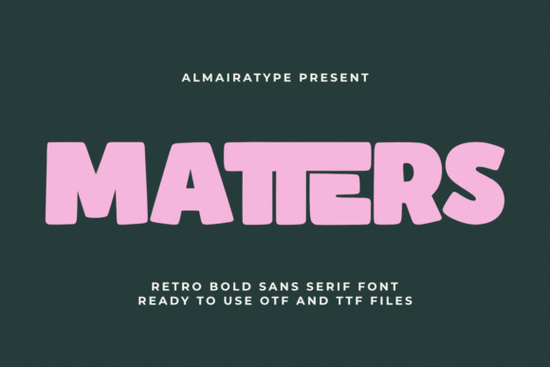
If you're looking for a bold, friendly sans serif font that works as well on a t-shirt chest print as it does on a social media banner or a sticker sheet, Matters Font is worth your attention. It’s not overly ornate or trendy in a fleeting way instead, it carries the relaxed confidence of 70s design with clean, modern execution. That balance makes it especially useful for people who need type that reads clearly at small sizes and holds up when scaled large on apparel or signage.
Who actually uses Matters Font and why?
Small business owners launching a new clothing line often start with fonts that feel “on brand” but don’t require design expertise to use well. Matters fits that need: its thick strokes and open letterforms mean it stays legible even when printed on textured fabric or curved surfaces like mugs. Print-on-demand sellers tell us it converts well on product mockups because it looks intentional not generic, not overdesigned.
Crafters using Cricut or Silhouette machines also appreciate how cleanly Matters cuts. Its vector outlines are smooth and consistent, with no thin hairlines or fragile joins that cause weeding headaches. You’ll spend less time cleaning up cut lines and more time assembling finished pieces whether that’s vinyl decals, iron-on transfers, or layered paper crafts.
How does it compare to other retro-inspired fonts?
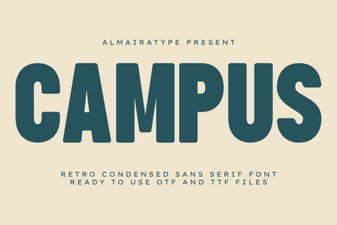
Unlike some slab serifs that lean heavy or rigid (like Campus Font), Matters keeps things approachable. It doesn’t shout it invites. Think of it as the kind of typeface you’d choose for a neighborhood coffee shop logo or a handmade soap label: warm, trustworthy, and quietly confident.
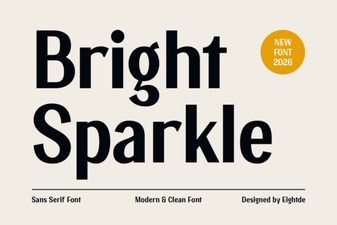
It shares some of the friendliness of Aesthetic Things Font, but with stronger contrast and better spacing out of the box so it works faster for quick-turnaround projects. And while Bright Sparkle Font adds whimsy with decorative elements, Matters delivers impact through structure and rhythm alone. No extra flourishes needed.
What kinds of files and features come with it?
You get the full OTF and TTF formats, plus web-ready WOFF files if you’re building a brand site or Shopify store. There’s also a bonus set of alternate characters slightly rounded versions of certain letters, plus stylistic numerals that help you fine-tune tone without switching fonts entirely.
All glyphs are carefully spaced and kerned, so words like “SWEATSHIRT” or “COFFEE CLUB” look balanced, not bunched or stretched. That matters most when you’re working with limited space like the front pocket of a tote bag or the side panel of a water bottle.
Where does it work best in real projects?
- T-shirts & hoodies: Works especially well for center-chest prints, sleeve text, or back graphics where clarity and presence matter more than subtlety.
- Stickers & decals: Clean outlines = easy weeding. Great for layered vinyl designs or minimalist quote stickers.
- Packaging & labels: Holds up on kraft paper, matte cardstock, or transparent sleeves without losing definition.
- Social media graphics: Reads well on mobile screens even in thumbnail size without needing bold overlays or drop shadows.
One thing users consistently mention: Matters feels familiar without feeling dated. It doesn’t rely on nostalgia as a crutch. That makes it easier to pair with contemporary photography, flat illustrations, or even minimalist layouts no forced “vintage” styling required.
A quick checklist before you download
- ✅ You need a bold sans serif that scales well from 12pt captions to 200pt headlines
- ✅ Your workflow includes cutting machines (Cricut, Silhouette) or print-on-demand platforms like Printful or Redbubble
- ✅ You prefer fonts with built-in consistency no manual tracking or letter-spacing tweaks needed for basic layouts
- ✅ You want something that feels human-made, not algorithmically generated
- ✅ You’re already exploring options like Matters Font alongside others in the Creative Fabrica library
If those match your needs, it’s likely worth trying in a real layout maybe swap it into an existing project just to see how the rhythm changes. Sometimes the best test isn’t a preview window, but seeing how it behaves next to your photos, colors, and real content.
Try It Free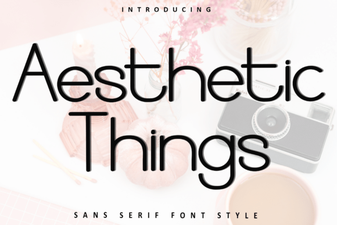 Fonts That Make Your Designs More Beautiful
 Sparkle Fonts to Elevate Your Creative Projects
 Designing Your Campus Font System
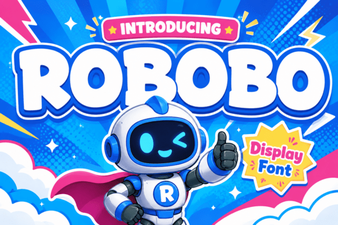 Robobo: a Modern Font for Digital Projects
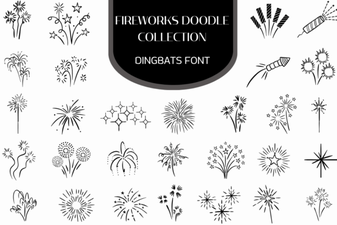 Spark Your Projects with Firework Doodle Fonts
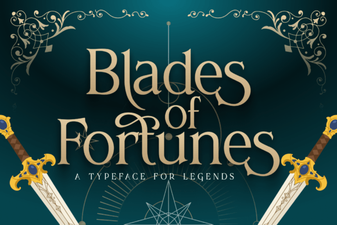 Designing Fortunes: a Font for Blade Themed Projects